


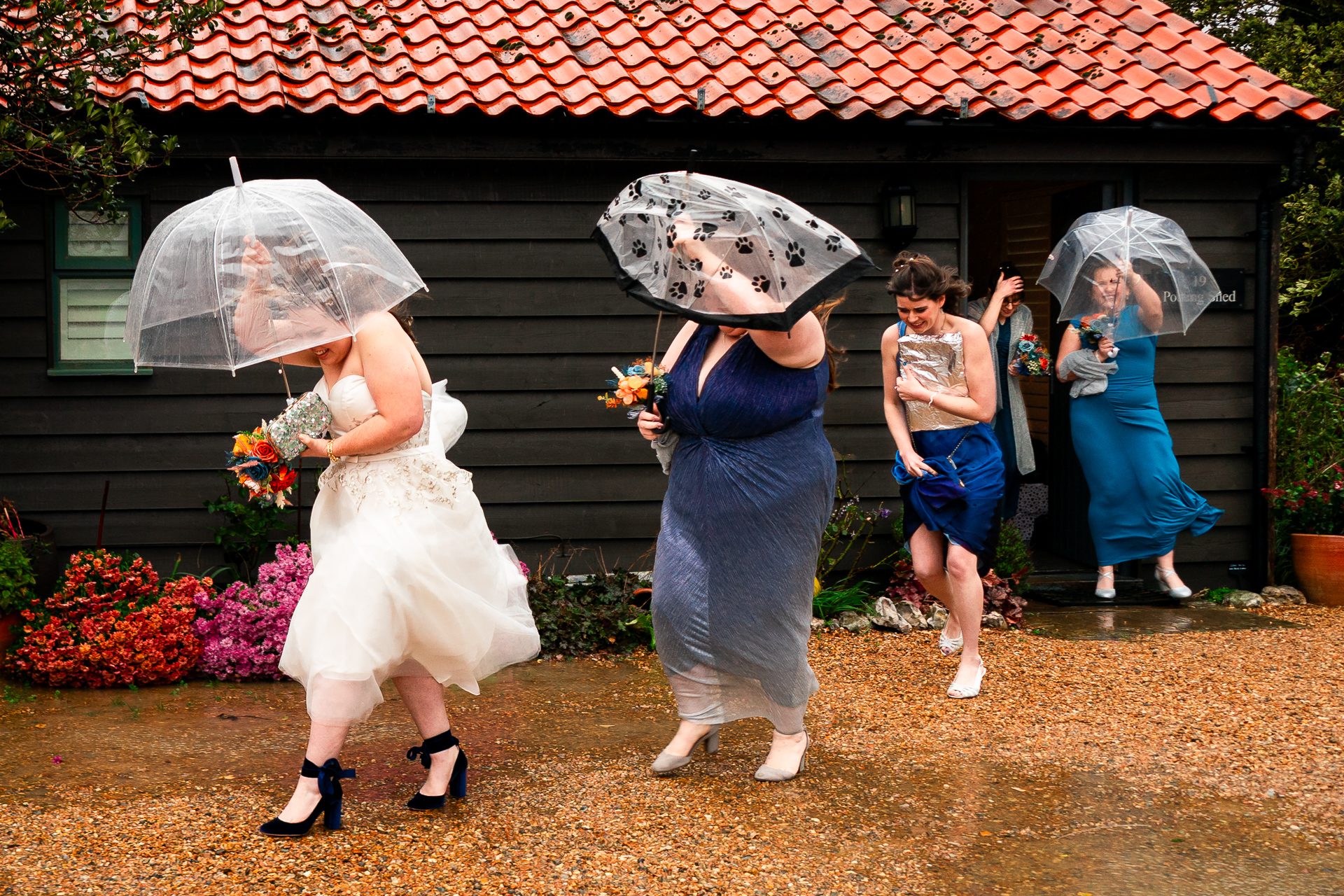
Candid vs Documentary Wedding Photos: What’s the Difference?
Candid vs Documentary Wedding Photos: What’s the Difference?
When couples start researching wedding photography styles they often come across two terms that sound almost identical: candid wedding photography and documentary wedding photography.
Because both styles involve photographing real moments without posing or directing people, the terms are often used interchangeably. The two can look very similar and I use both together to construct a narrative over the whole day. I call this combination candid storytelling.
But there is a subtle difference between candid vs documentary wedding photos, and understanding that difference helps explain why some images feel more like simple moments while others feel like part of a bigger story.
What Are Candid Wedding Photos?
A candid wedding photo is a moment captured naturally without the subject being aware they’re being photographed.
There’s no posing, no direction, and no setup. The photographer simply notices something happening and captures it.
These images often show quick, genuine interactions — someone laughing during a conversation, a guest reacting during a speech, or a brief exchange between friends.
Candid photos tend to feel spontaneous and immediate. They capture a single moment in time.
You’ll often see them described as “snapshots of real life”, because they freeze a natural interaction exactly as it happened.
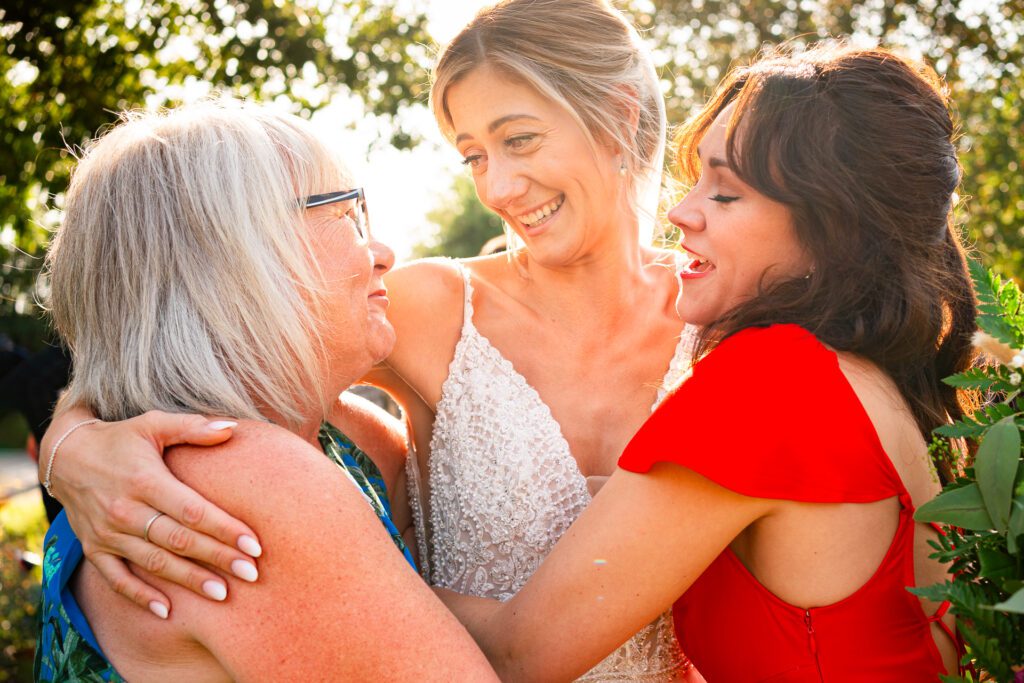
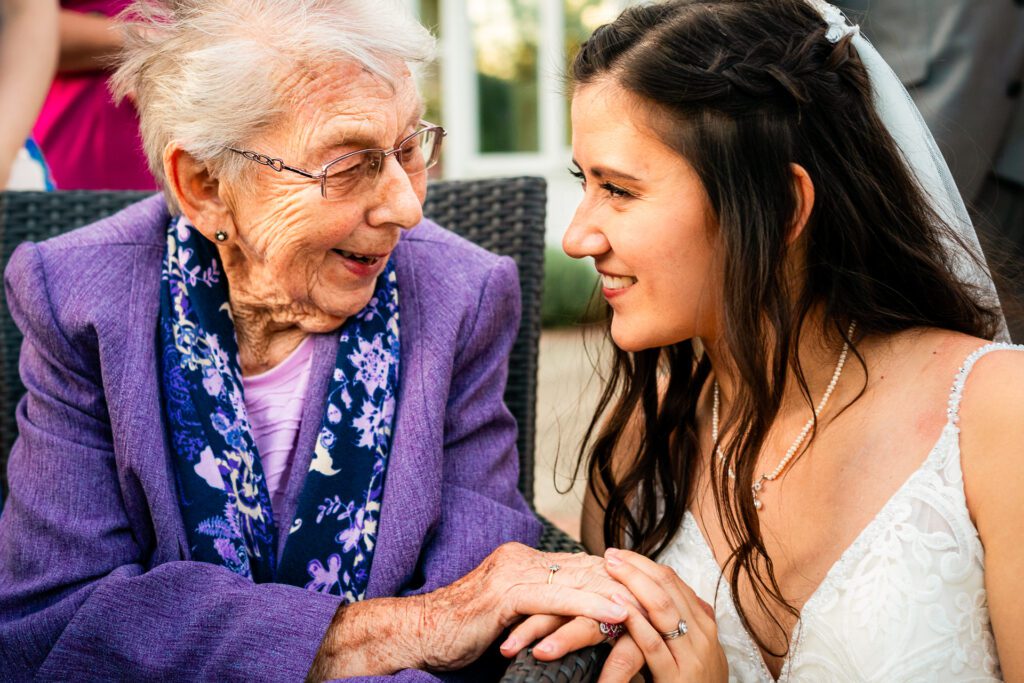
A candid photograph of the bride with two guests just after the ceremony.
What Is Documentary Wedding Photography?
Documentary wedding photography also captures real moments without posing or directing people, but it goes a step further.
Rather than simply reacting to moments, documentary photography focuses on telling a story.
A documentary image usually includes more context within the frame — the people involved, the surrounding environment, and the reactions happening around the moment itself.
Instead of isolating a single reaction, the photograph places that moment within the wider scene.
That extra context creates a stronger sense of narrative.
You’re not just seeing what happened.
You’re seeing where it happened and how people around it responded.

Here you can see the flower girls playing on the bed frame while hair and make up goes on around them. This could be zoomed in to just a tight framing around the girls, but a wider frame shows more context.
The Key Difference Between Candid and Documentary Photos
At first glance, candid and documentary images can look very similar. Both are natural, unposed and unscripted.
The difference lies in how the image is built.
Candid photos often happen quickly. The photographer notices something happening and captures it in the moment, like the picture above of the bride hugging two guests.
Documentary photography is more intentional. In the above prep room photo I was deliberately stood back to get the whole scene in while the flower girls played on the bed as I knew I wanted to show them in context with the bride’s make up going on on the right of the frame.
As a documentary photographer I’m often looking for scenes that have storytelling potential. Interesting relationships between people, layers within the frame, or details that help explain the moment.
That anticipation is what creates the layered storytelling that defines documentary photography.
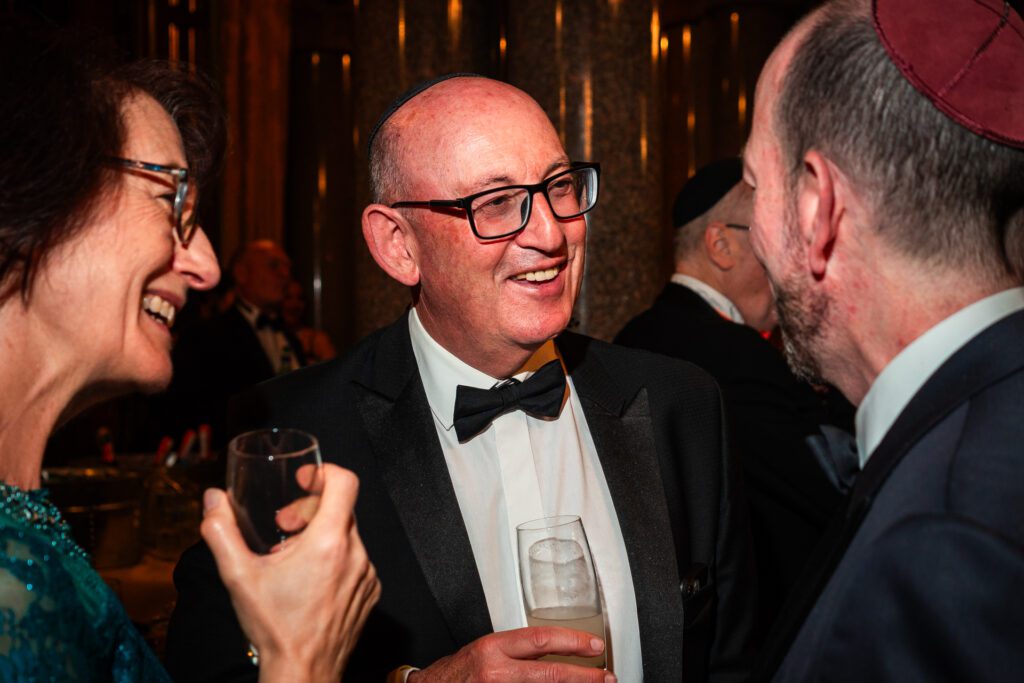
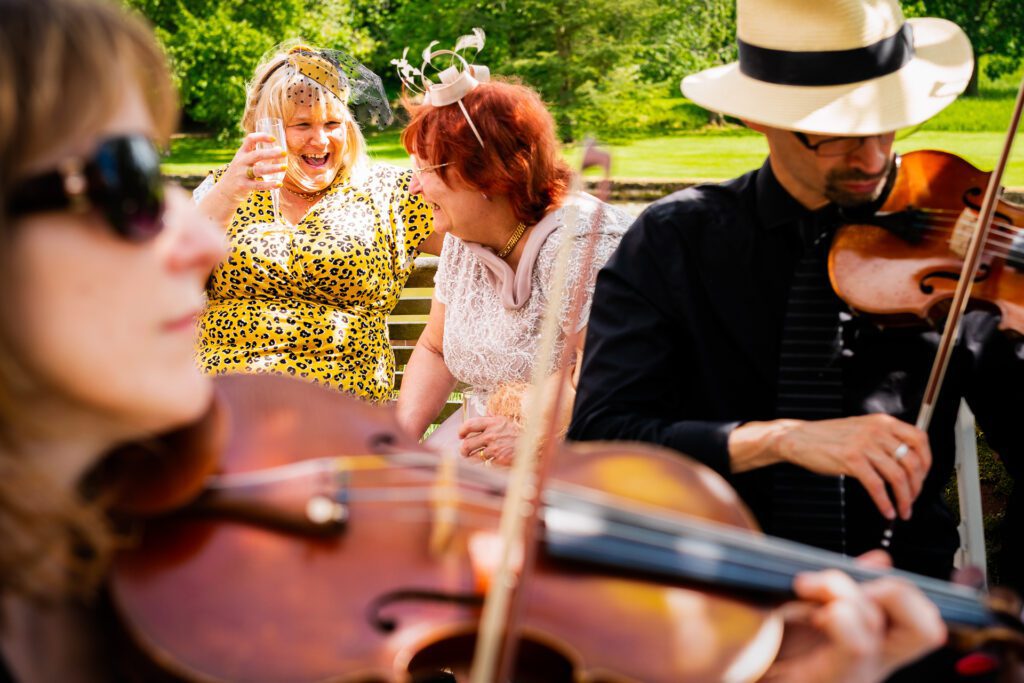
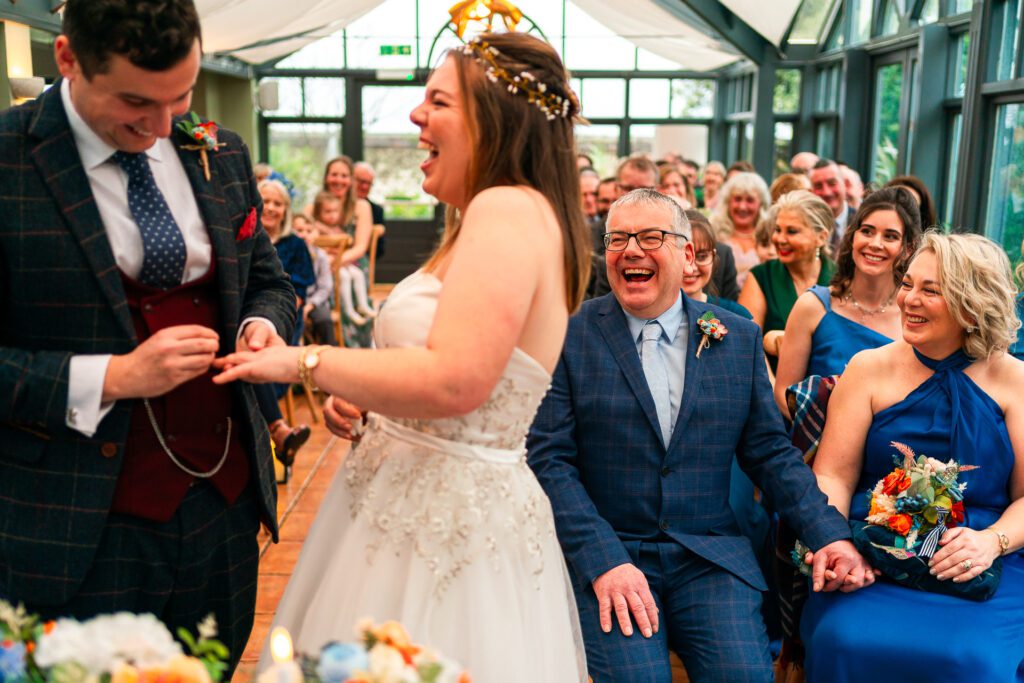
The left shot is a classic candid image of the father of the groom smiling. On the right, the framing is more considered. I wanted to show the string quartet playing to give context and atmosphere to the image while the guests laughs. This one took longer to take as I needed to frame the guests in the gap between the musicians and then wait for the laughter. Both images are important to mix together to give the final gallery depth and dynamics.
An Example From a Real Wedding
A good way to understand the approach for documentary images is through a real example.
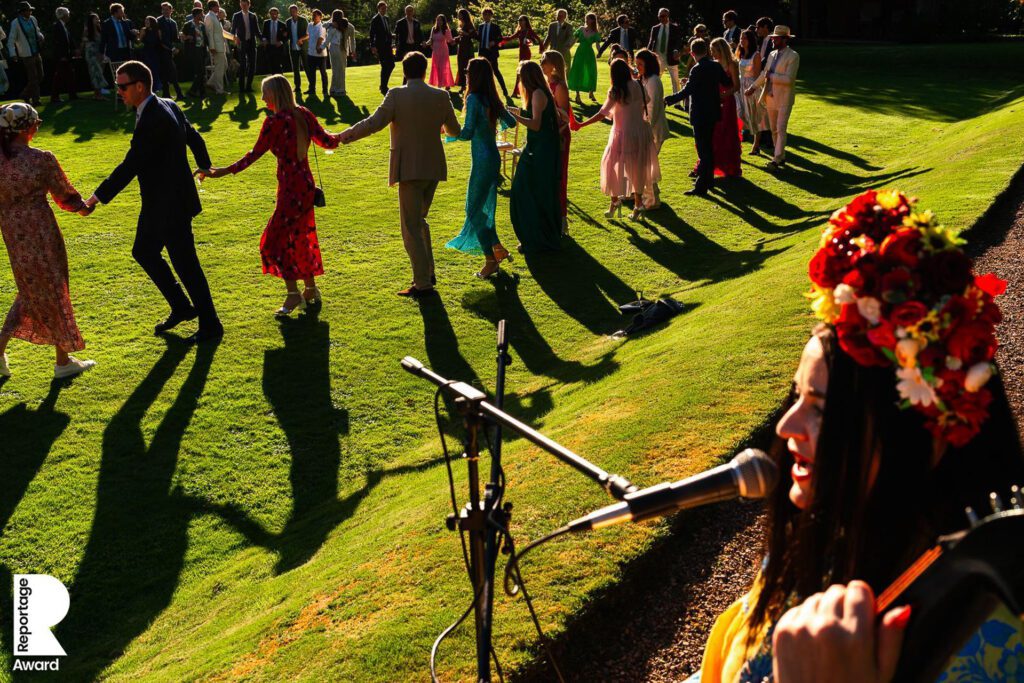
The frame below was taken at a wedding where the bride was Ukrainian. The drinks reception took place in a garden with the low autumn sun making huge shadows. Before heading in for food there was a performance from a traditional Ukrainian folk singer playing a bandura.
As the guests danced to the music the shadows cast across the ground were quite striking and I knew I wanted to capture them. Framing the singer in the front of the frame gives the context of the music being played so it’s clear why everyone is holding hands in a circle, while the shadows place the time of day while you can feel the warmth of the late afternoon sun on your face. I then waited for the circle of guests to form a pleasing shape to maximise the shapes of both the people and the shadows.
That’s the kind of image that comes from seeing the potential for a scene and waiting for the moment to complete the story.
Why Documentary Photos Often Feel More Powerful
One of the biggest advantages of documentary wedding photography is how effectively it helps couples relive the day.
Because documentary images include more of the surroundings and the people involved, they recreate the atmosphere of the moment.
You’re not just seeing a reaction or a smile.
You’re seeing the room, the location, the guests and the environment that formed the backdrop to that moment.
Those extra layers help place you back inside the scene.
Years later, when couples look through their photographs, those images often bring back the strongest memories because they show how the day actually felt.
Mixing Candid and Documentary Wedding Photography
When I photograph weddings, my focus is always on telling the story of the day from beginning to end.
That means I’m constantly looking for moments that contribute to the wider narrative of the wedding.
Candid moments naturally happen along the way — laughter between friends, reactions during speeches, small interactions between guests.
But the goal is always to capture those moments within the context of the day, building a collection of photographs that together tell the full story.
Rather than a series of isolated snapshots, the images become part of a visual narrative of the wedding.
The combination of both brings together a story which allows you to feel the day back again and again.
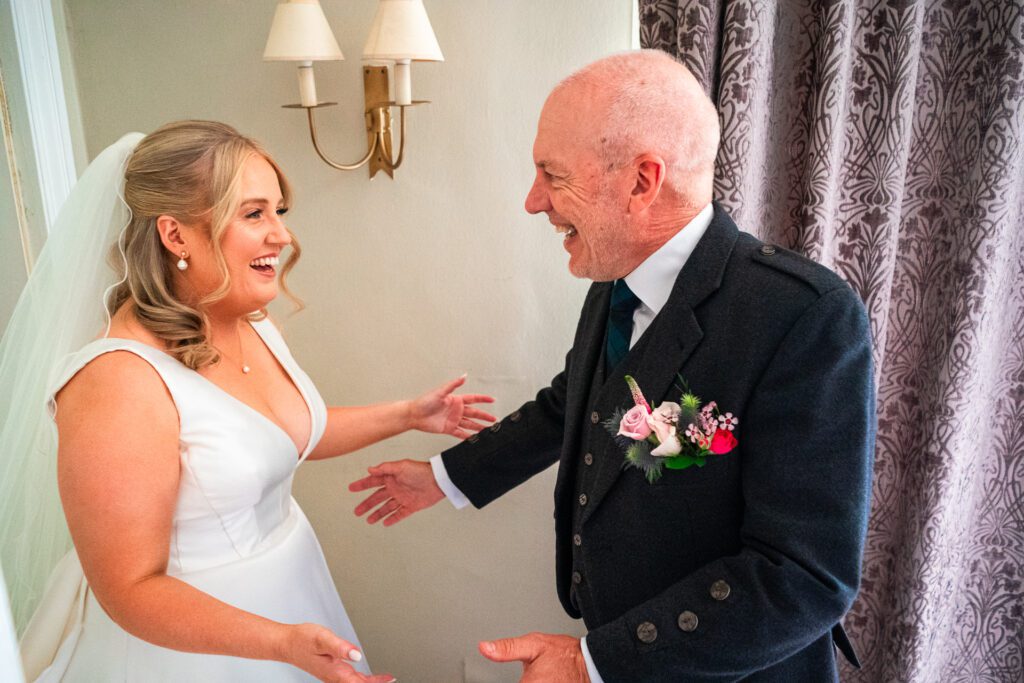
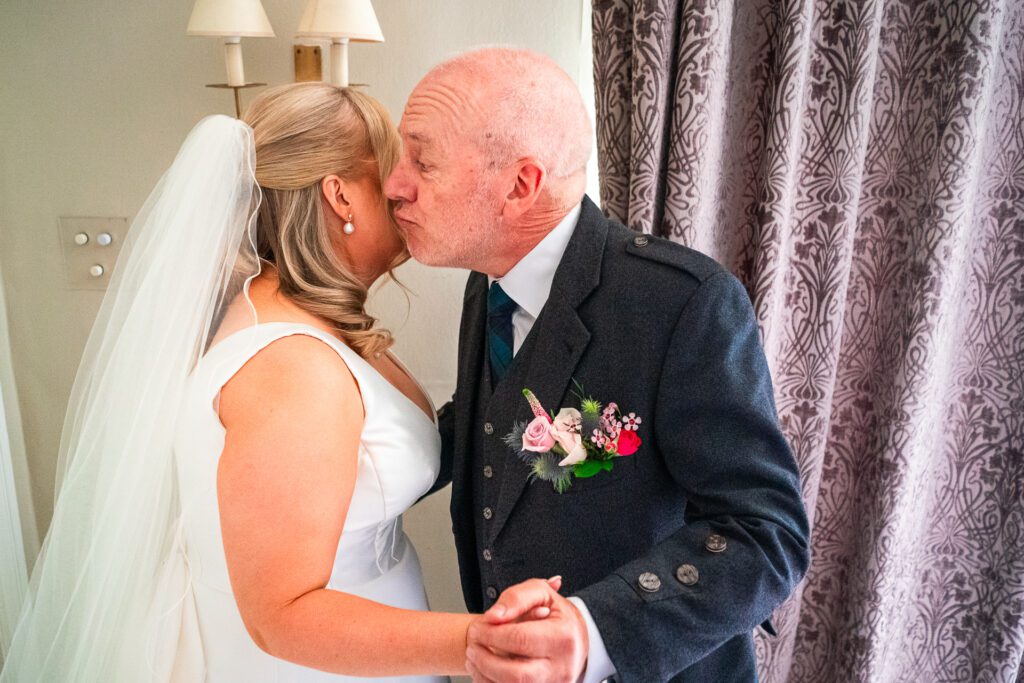
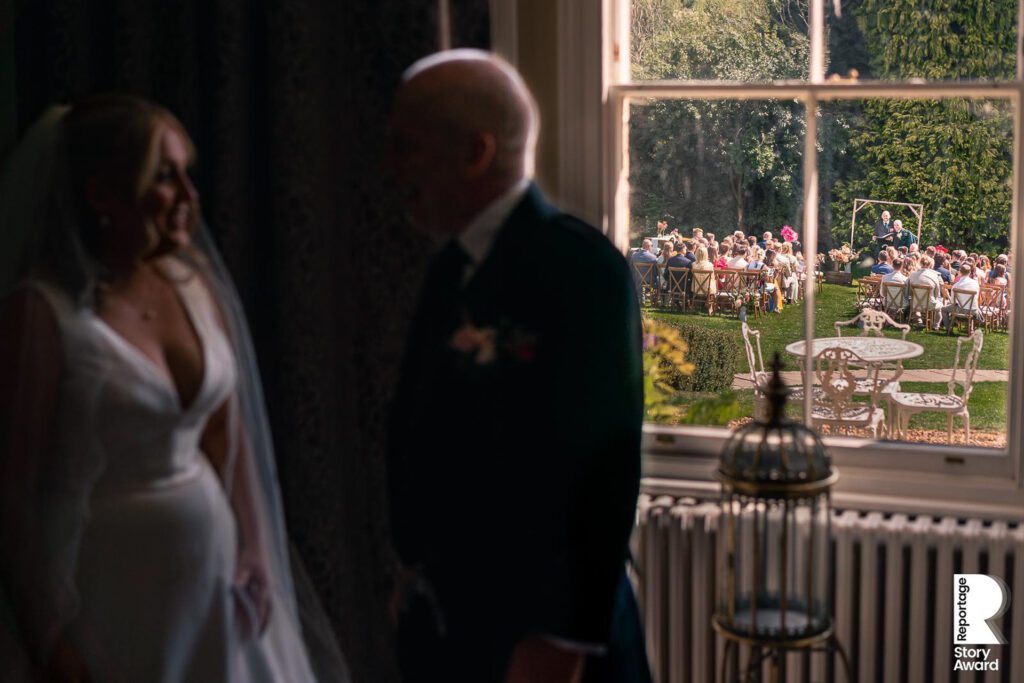
In the following sequence of images you can see the father of the bride seeing her in her dress for the first time. The first two images for more candid in nature with simple framing showing their reactions and then having an embrace. For the third shot I moved back to show that outside you can see the ceremony area in the garden with guests seated and the groom waiting at the end of the aisle. I love being able to capture two different moments in one frame to connect them.
Candid vs Documentary Wedding Photos in Simple Terms
So what’s the difference between candid vs documentary wedding photos?
Both styles capture real moments without posing people.
Candid photos tend to capture simple, spontaneous interactions.
Documentary photos go further by capturing those moments within a wider story, using context, environment and layered composition to create a stronger narrative.
Both are natural. Both are authentic.
But documentary photography is ultimately about telling the story of the wedding day, not just capturing moments within it.
You can learn more about Documentary Wedding Photography here.
TLDR: Candid vs Documentary Wedding Photos
Are candid and documentary wedding photos the same?
Not exactly. Both are natural and unposed, but documentary photography focuses more on storytelling and context within the image.
Are documentary wedding photos still candid?
Yes. Documentary photography includes candid moments, but the photographer often anticipates scenes to create images with more depth and narrative.
You can learn more about Documentary Wedding Photography here. You can check out more candid and documentary images in my portfolio or click here to get in touch. I’d love to hear about your wedding plans!
